『Directionally Correct, A People Analytics Podcast』のカバーアート

Directionally Correct, A People Analytics Podcast

Directionally Correct, A People Analytics Podcast

著者: WRKdefined Podcast Network
無料で聴く

今ならプレミアムプランが3カ月 月額99円

2026年5月12日まで。4か月目以降は月額1,500円で自動更新します。

概要

Directionally Correct is the #1 people analytics podcast in the world. Hosted by Cole Napper, the podcast dives into people analytics, workforce planning, behavioral science, and talent intelligence, helping leaders navigate the future of AI in the workplace with insight and a dash of fun. To find out more, check out colenapper.comAll rights reserved by WRKdefined マネジメント マネジメント・リーダーシップ 科学 経済学
エピソード
  • Is People Analytics Ready to be CHRO & Executive Search - Jennifer Wilson - #169
    2026/04/20
    Thanks to HRBench for powering this episode. To find out more about the company building the future of people intelligence, reach out to book a demo at hrbench.com/directionallycorrect ! Check out this episode of the #1 people analytics podcast with special guest, Jennifer Wilson, Partner and Global Co-Head, HR Officers Practice at Heidrick & Struggles! In this wide-ranging and deeply practical conversation, Cole Napper sits down with Jennifer Wilson to unpack how the role of the Chief Human Resources Officer is evolving in real time—and why the expectations for HR leadership have never been higher. Jennifer shares her unconventional path into executive search, describing how her early career in consulting and global work across Hong Kong and the US shaped her perspective on leadership, organizational design, and the human side of business transformation. What emerges is a clear view of executive search not just as recruiting, but as a front-row seat to how leadership itself is changing. A major theme throughout the discussion is the rapid expansion of the CHRO role. Drawing on research from Heidrick & Struggles, Jennifer explains how the number of required capabilities for CHROs has nearly doubled over the past decade, reflecting the growing complexity of the job. Today’s CHRO is no longer an administrative leader but a strategic enterprise partner expected to connect business strategy with people strategy, advise CEOs directly, and lead through ambiguity. The conversation highlights how skills like AI enablement, workforce planning, succession strategy, and organizational design are becoming essential, alongside enduring traits like empathy, judgment, and high emotional intelligence. The discussion goes deep on AI’s impact, particularly the idea of an “AI-native CHRO.” Jennifer is candid that such profiles are still rare, with most leaders only having partial exposure to AI-driven transformation. Rather than searching for perfect technical expertise, organizations are prioritizing curiosity, adaptability, and the ability to lead change. This reflects a broader shift: the future of HR leadership is less about mastering every domain and more about integrating across them. Cole and Jennifer also explore career pathways into the CHRO role, including the limitations of traditional HR development models. They discuss why many leaders lack the breadth of experience required and why moving from a number two role into the top job is such a significant leap. People analytics emerges as a particularly interesting lens—while it offers a unique enterprise-wide perspective, Jennifer notes that it cannot be the sole foundation for a future CHRO. Exposure to business leadership, operational accountability, and direct advisory experience remains critical. The conversation also demystifies executive search, clarifying a common misconception: search firms work for companies, not candidates. While building relationships can help, relying solely on headhunters is not a viable career strategy. This insight grounds the discussion in reality, emphasizing the importance of proactive career management. In the latter part of the episode, the conversation broadens to hiring practices, assessment tools, and the growing intersection between HR and technology. Jennifer pushes back on the idea of merging CHRO and CTO roles, arguing instead for stronger collaboration rather than unrealistic “unicorn” expectations. The future, she suggests, will depend on how effectively leaders integrate human and technical systems to drive organizational success. Throughout, Jennifer paints a compelling picture of the ideal HR leader for the future: engaging, empathetic, data-driven, agile, and capable of navigating constant change. It’s a vision that challenges both current leaders and aspiring ones to rethink how they build skills, gain experience, and lead in an increasingly complex world. If you like this episode, you’d also love exploring prior episodes—visit colenapper.com for the full archive and show links.
    続きを読む 一部表示
    51 分
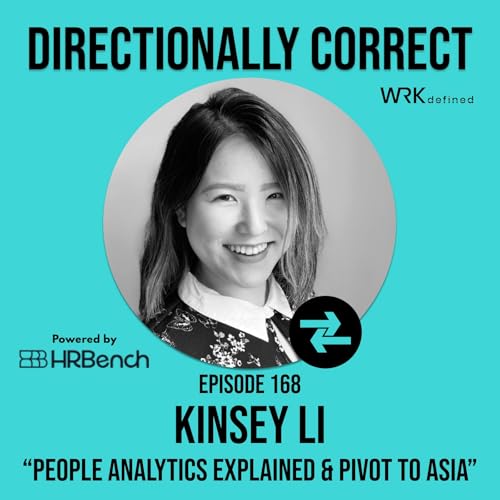
  • People Analytics Explained, Consulting Skills & Pivot to Asia - Kinsey Li - #168
    2026/04/13
    Thanks to HRBench for powering this episode. To find out more about the company building the future of people intelligence, reach out to book a demo at hrbench.com/directionallycorrect Check out this episode of the #1 people analytics podcast special guest, Kinsey Li, Author of "People Analytics Explained" and Advisor at PwC! In this wide-ranging and deeply thoughtful conversation, host Cole Napper sits down with Kinsey to explore what it truly takes to succeed in people analytics beyond the technical skills that often dominate the narrative. Kinsey shares the inspiration behind her book, which emerged from her own early frustrations breaking into the field. Despite completing courses and gaining certifications, she found a major gap between technical training and the real-world capabilities required to be effective. Her core insight reframes the discipline: people analytics is not primarily about data, but about relationships. In her experience, success in the field is closer to 80% stakeholder management and 20% technical execution, a perspective that challenges how many professionals approach their development. The conversation dives into the consulting mindset that has shaped Kinsey’s career, highlighting two essential skills: scoping and listening. She explains that scoping is fundamentally about defining boundaries—understanding what problem you are solving, what success looks like, and just as importantly, what you will not address. In a field where organizational challenges are deeply interconnected, the ability to prioritize and maintain focus is critical. This requires not only analytical thinking but also confidence and judgment to push back when necessary. Kinsey also offers a fascinating look at how cultural context shapes people analytics work. Drawing on her experience across Australia, the UK, and now Jakarta, she contrasts Western and Eastern workplace dynamics. In more hierarchical environments, decisions can be executed بسرعة and scaled quickly, but often with less consultation. At the same time, she notes that some of the most advanced people analytics practices exist in small, less visible pockets across Asia, where innovation happens quietly without widespread sharing. The discussion expands into themes of career growth and learning, reinforcing the idea that breadth of experience often outweighs early specialization. Kinsey connects this to probabilistic thinking, emphasizing that careers are less like chess and more like poker, where exposure to diverse experiences increases the likelihood of long-term success. This aligns with Cole’s own reflections on building expertise through multidisciplinary exposure rather than narrow focus. They also explore evolving attitudes toward AI and data privacy, particularly among younger generations. Kinsey observes that digital natives are more willing to delegate thinking to AI and are often more comfortable sharing personal data, a shift that has significant implications for the future of people analytics. At the same time, both highlight the importance of maintaining ethical guardrails as capabilities expand. Throughout the episode, Kinsey brings a candid and personal perspective, discussing how her evolving mindset, including embracing a “default trust” approach and navigating neurodiversity, has shaped how she works and interacts with others. Her journey underscores that effectiveness in people analytics is as much about self-awareness and adaptability as it is about technical skill. This episode is a compelling reminder that the future of people analytics will be defined not just by better data, but by better thinking, stronger relationships, and a deeper understanding of how work actually gets done across different contexts and cultures. If you like this episode, you’d also love exploring prior episodes—visit colenapper.com for the full archive and show links.
    続きを読む 一部表示
    1 時間 4 分
  • What RedThread Research Says About AI & Everything Else - Stacia Garr & Dani Johnson - #167
    2026/04/06
    Thanks to HRBench for powering this episode. To find out more about the company building the future of people intelligence, reach out to book a demo at hrbench.com/directionallycorrect Check out this episode of the #1 people analytics podcast with special guests, Stacia Garr & Dani Johnson, both are Co-Founders and Principal Analysts at RedThread Research! In this wide-ranging and intellectually rich conversation, Cole Napper sits down with two of the most influential thinkers in the people analytics and HR research space to explore how AI, data, and evolving workforce dynamics are reshaping how organizations operate and make decisions. The discussion dives into RedThread’s latest research, including the evolution of mega trends shaping the future of work. Stacia and Dani reflect on themes like geopolitical disruption, the continued shift toward growth over people, and the accelerating integration of AI into enterprise workflows. Rather than viewing AI as a standalone concept, they emphasize it as an enabler becoming embedded into how organizations function—so much so that it may soon become “the air we breathe.” A major focus is the rise of multi-source analysis platforms (MSAPs), which aggregate and harmonize data across HR systems to drive better decisions. The trio explores how organizations are moving beyond siloed data toward integrated ecosystems combining employee experience, workforce planning, skills data, and operational insights. This shift represents a broader transformation in how companies understand work, breaking it down into tasks, outcomes, and dynamic systems involving both humans and AI. Dani brings a strong perspective on skills, tasks, and talent mobility, arguing that tasks may serve as the bridge between skills and work in an AI-driven world. However, both she and Stacia challenge the idea that mapping tasks alone is enough, suggesting organizations may need to rethink work from the outcome level entirely. This raises questions about whether current workforce design approaches are too rooted in legacy systems already being disrupted by AI. The episode also tackles a central question: will AI replace jobs or augment them? Stacia and Dani are clear—AI will replace some jobs, and already is. The challenge lies in how organizations respond, particularly in redeploying talent, maintaining learning pathways, and ensuring employees build the judgment needed to work effectively alongside AI. Another thread explores the “hollowed-out expert,” where individuals appear knowledgeable due to AI but lack true expertise. This raises concerns about authenticity and performance assessment, especially as research shows AI effectiveness depends heavily on user knowledge and cognitive ability. Throughout, the conversation challenges rigid HR operating models and one-size-fits-all transformation frameworks, emphasizing that success depends on asking better questions, understanding context, and adapting continuously. The episode closes with reflections on career success, the importance of social capital, and a core truth: despite rapid technological change, organizations exist because people prefer to work together. If you like this episode, you’d also love exploring prior episodes—visit colenapper.com for the full archive and show links.
    続きを読む 一部表示
    1 時間 12 分
まだレビューはありません