エピソード

  • Why NASA is betting big on Artemis II moon mission
    2026/04/03
    In this episode of Science Quickly, we break down the successful launch of NASA’s Artemis II mission—the first crewed journey toward the moon in more than 50 years—as space editor Lee Billings explains how the Orion spacecraft will slingshot around the moon, what risks still lie ahead, why this test flight matters for future lunar landings, and how everything from heat‑shield concerns to the spacecraft’s upgraded toilet fits into NASA’s larger plan to build a long‑term presence on the moon. Recommended Reading: Live: NASA’s Artemis II moon mission launches Artemis II’s journey to the moon, day by day NASA’s moon mission day one: a toilet mishap and spacecraft maneuvers NASA’s Artemis II launches on first crewed moon mission of the 21st century E-mail us at sciencequickly@sciam.com if you have any questions, comments or ideas for stories we should cover! Discover something new everyday: subscribe to Scientific American and sign up for Today in Science, our daily newsletter. Science Quickly is produced by Kendra Pierre-Louis, Fonda Mwangi, Sushmita Pathak and Jeff DelViscio. This episode was edited by Alex Sugiura, with fact-checking by Shayna Posses and Aaron Shattuck. Our theme music was composed by Dominic Smith. Learn more about your ad choices. Visit megaphone.fm/adchoices
    続きを読む 一部表示
    20 分
  • We weren’t supposed to have chins
    2026/04/01
    Humans are the only species that has chins. How this unique trait evolved has always been somewhat of a mystery. In this episode of Science Quickly, host Kendra Pierre-Louis talks to paleoanthropologist Lauren Schroeder, who co-authored a recent study that sheds light on the evolutionary riddle of the chin and the ways that evolution can sometimes occur unexpectedly. Recommended Reading: “Is the Human Chin a Spandrel? Insights from an Evolutionary Analysis of Ape Craniomandibular Form,” by Noreen von Cramon-Taubadel et al, in PLOS One, Vol. 21, No. 1; January 29, 2026 E-mail us at sciencequickly@sciam.com if you have any questions, comments or ideas for stories we should cover! Discover something new every day: subscribe to Scientific American and sign up for Today in Science, our daily newsletter. Science Quickly is produced by Kendra Pierre-Louis, Fonda Mwangi, Sushmita Pathak and Jeff DelViscio. This episode was edited by Alex Sugiura, with fact-checking by Shayna Posses and Aaron Shattuck. Our theme music was composed by Dominic Smith. Learn more about your ad choices. Visit megaphone.fm/adchoices
    続きを読む 一部表示
    14 分
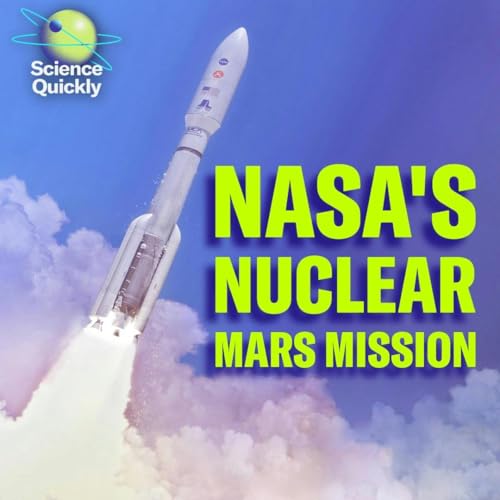
  • NASA’s nuclear spacecraft, Iran war climate fallout and a promising new Lyme shot
    2026/03/30
    In this episode of Science Quickly, we dig into NASA’s bold push toward a nuclear‑powered mission to Mars and plans for a long‑term lunar base, examine how the Iran war has triggered massive carbon emissions and a looming climate cost from the needed reconstruction and break down the promising latest results from Pfizer and Valneva’s new Lyme disease vaccine—all packed into your weekly science news roundup. Recommended Reading: NASA announces nuclear-powered Mars mission by 2028 NASA unveils ambitious new moon base plans Why Iran is targeting Qatar’s liquid natural gas trains E-mail us at sciencequickly@sciam.com if you have any questions, comments or ideas for stories we should cover! Discover something new everyday: subscribe to Scientific American and sign up for Today in Science, our daily newsletter. Science Quickly is produced by Kendra Pierre-Louis, Fonda Mwangi, Sushmita Pathak and Jeff DelViscio. This episode was edited by Alex Sugiura, with fact-checking by Shayna Posses and Aaron Shattuck. Our theme music was composed by Dominic Smith. Learn more about your ad choices. Visit megaphone.fm/adchoices
    続きを読む 一部表示
    11 分
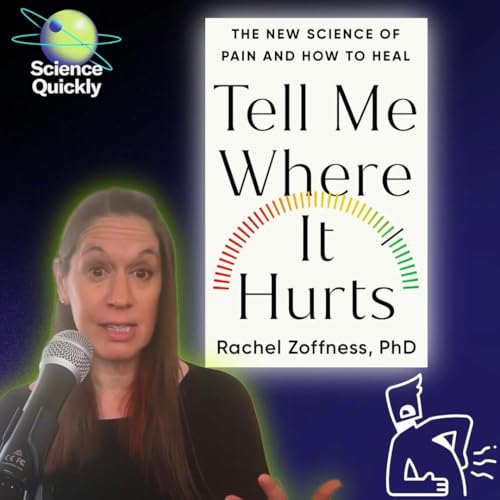
  • You’ve been lied to about pain—here’s the truth
    2026/03/27
    In this episode of Science Quickly, pain scientist Rachel Zoffness reveals why pain isn’t just a body problem but also a brain‑driven warning system that we’ve been misunderstanding for decades. She and host Kendra Pierre‑Louis unpack wild examples, hidden factors that dial pain up or down and simple, science‑backed practical strategies from Zoffness’s new book Tell Me Where It Hurts that can help you feel better. Recommended Reading: Tell Me Where It Hurts. Rachel Zoffness. Grand Central Publishing, 2026 E-mail us at sciencequickly@sciam.com if you have any questions, comments or ideas for stories we should cover! Discover something new every day: subscribe to Scientific American and sign up for Today in Science, our daily newsletter. Science Quickly is produced by Kendra Pierre-Louis, Fonda Mwangi, Sushmita Pathak and Jeff DelViscio. This episode was edited by Alex Sugiura, with fact-checking by Shayna Posses and Aaron Shattuck. Our theme music was composed by Dominic Smith. Learn more about your ad choices. Visit megaphone.fm/adchoices
    続きを読む 一部表示
    23 分
  • Can AI do math, or does it just act like a calculator?
    2026/03/25
    In this episode of Science Quickly, Kendra Pierre-Louis and SciAm reporter Joe Howlett explore a new math challenge designed to test whether today’s AI models can truly tackle cutting‑edge proofs. They break down how the experiment works, what early results say about AI’s mathematical abilities and why researchers are still debating whether these tools are revolutionizing math or just offering a high‑powered assist. Recommended Reading: As AI keeps improving, mathematicians struggle to foretell their own future AI just got its toughest math test yet. The results are mixed Is AI on the precipice of revolutionizing math? It depends E-mail us at sciencequickly@sciam.com if you have any questions, comments or ideas for stories we should cover! Discover something new every day: subscribe to Scientific American and sign up for Today in Science, our daily newsletter. Science Quickly is produced by Kendra Pierre-Louis, Fonda Mwangi, Sushmita Pathak and Jeff DelViscio. This episode was edited by Alex Sugiura, with fact-checking by Shayna Posses and Aaron Shattuck. Our theme music was composed by Dominic Smith. Learn more about your ad choices. Visit megaphone.fm/adchoices
    続きを読む 一部表示
    16 分
  • Heat dome, legal win for vaccines, lead-tainted clothes
    2026/03/23
    In this episode of Science Quickly, Andrea Thompson, senior desk editor for life sciences at Scientific American, joins host Kendra Pierre-Louis to discuss the recent heat wave in parts of the U.S. We’ll also dive into a recent district court ruling against a decision by the Trump administration to overhaul the Centers for Disease Control and Prevention’s recommended childhood vaccine schedule. Plus, we look at new research about unsafe levels of lead in kids’ clothing. Finally, we’ll explore the new era of mega constellations as active SpaceX satellites orbiting Earth cross the 10,000 mark. Recommended Reading: Everything about this week’s record-shattering western heat wave is extreme Judge temporarily blocks key parts of RFK, Jr.’s effort to overhaul U.S. childhood vaccines Influential vaccine advisory panel may be ‘disbanded’ after lawsuit, says former vice chair SpaceX now has more than 10,000 Starlink satellites in orbit E-mail us at sciencequickly@sciam.com if you have any questions, comments or ideas for stories we should cover! Discover something new everyday: subscribe to Scientific American and sign up for Today in Science, our daily newsletter. Science Quickly is produced by Kendra Pierre-Louis, Fonda Mwangi, Sushmita Pathak and Jeff DelViscio. This episode was edited by Alex Sugiura, with fact-checking by Shayna Posses and Aaron Shattuck. Our theme music was composed by Dominic Smith. Learn more about your ad choices. Visit megaphone.fm/adchoices
    続きを読む 一部表示
    12 分
  • Andy Weir spills the space tea on Ryan Gosling and Project Hail Mary
    2026/03/20
    In this episode of Science Quickly, author Andy Weir joins SciAm’s Bri Kane to talk all things Project Hail Mary—from working with Ryan Gosling on the new film adaptation of the book to building the extraterrestrial character Rocky’s alien world and blending real science with playful fiction. And Weir explains why he himself would never volunteer for a space mission. Recommended Reading: Ryan Gosling says Project Hail Mary is ‘a reminder of what we’re capable of’ E-mail us at sciencequickly@sciam.com if you have any questions, comments or ideas for stories we should cover! Discover something new everyday: subscribe to Scientific American and sign up for Today in Science, our daily newsletter. Science Quickly is produced by Kendra Pierre-Louis, Fonda Mwangi, Sushmita Pathak and Jeff DelViscio. This episode was co-hosted by Bri Kane and edited by Alex Sugiura and Marta Hill. Shayna Posses and Aaron Shattuck fact-check our show. Our theme music was composed by Dominic Smith. Learn more about your ad choices. Visit megaphone.fm/adchoices
    続きを読む 一部表示
    14 分
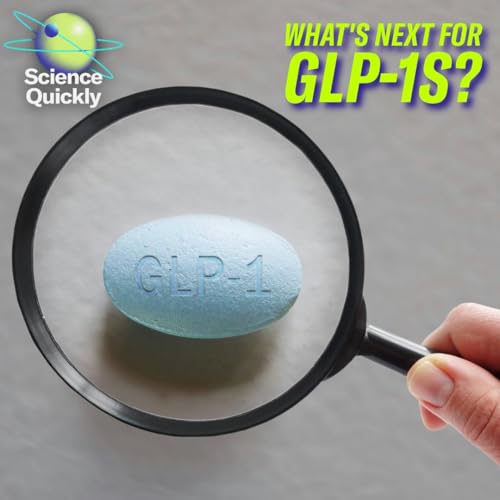
  • GLP-1 drugs are entering a new chapter
    2026/03/18
    In this episode of Science Quickly, Scientific American’s associate health editor Lauren Young joins host Kendra Pierre-Louis to talk about how the story of GLP‑1 drugs such as Ozempic, Wegovy and Mounjaro is evolving. We trace GLP-1s’ origins as type 2 diabetes treatments, their rise as blockbuster weight‑loss medications and the ensuing complications—including the expanding market for compounded drugs. And we look at how the landscape has only grown more complex as researchers explore surprising potential uses for GLP‑1s, from addiction treatment to cardiovascular benefits, even as new concerns emerge about long‑term effects. Recommended Reading: Compound weight-loss drugs are everywhere. The FDA is cracking down People who took GLP-1 drugs had lower risk of all kinds of drug and alcohol addiction E-mail us at sciencequickly@sciam.com if you have any questions, comments or ideas for stories we should cover! Discover something new everyday: subscribe to Scientific American and sign up for Today in Science, our daily newsletter. Science Quickly is produced by Kendra Pierre-Louis, Fonda Mwangi, Sushmita Pathak and Jeff DelViscio. This episode was edited by Alex Sugiura, with fact-checking by Shayna Posses and Aaron Shattuck. Our theme music was composed by Dominic Smith. Learn more about your ad choices. Visit megaphone.fm/adchoices
    続きを読む 一部表示
    16 分