『But First, Coffee』のカバーアート

But First, Coffee

But First, Coffee

著者: WRKdefined Podcast Network
無料で聴く

今ならプレミアムプランが3カ月 月額99円

2026年5月12日まで。4か月目以降は月額1,500円で自動更新します。

概要

But First, Coffee is a live weekly talk show where Jackye Clayton and John Baldino bring candid, insightful conversations about the world of work, leadership, and all things people. Each episode blends expert insight with real-world experience—covering employee engagement, leadership, inclusion, technology, and culture. It's not just HR theory; it's HR reality, poured fresh each week.All rights reserved by WRKdefined マネジメント マネジメント・リーダーシップ 出世 就職活動 経済学
エピソード
  • Trade War Hits HR: Planning in the Fog
    2026/04/16
    Tariffs, supply chain disruptions, and economic uncertainty have landed squarely in HR's lap. John and Jackye talk through what HR leaders are actually doing when the business environment shifts faster than any workforce plan can accommodate, and how to lead teams through decisions that cannot wait for clarity. Key Takeaways: Trade policy volatility is not just a finance problem — it forces HR to make compensation, headcount, and hiring decisions under incomplete information. Scenario planning is the most practical tool HR has right now; waiting for certainty before acting is itself a decision with consequences. Leaders who communicate uncertainty honestly build more trust than those who project false confidence or go silent. Hiring freezes in reaction to tariff news often damage long-term talent pipelines more than the immediate cost savings justify. Compensation strategy gets complicated fast when cost pressures meet a labor market that still expects wage growth. HR needs a seat at the table when executive teams are modeling financial scenarios, not just when the decisions are handed down. Employee anxiety rises when external news is bad and internal communication is absent; proactive messaging is not optional. Global companies face layered complexity — workforce implications of trade disputes differ significantly by region and role type. Workforce agility, cross-training, and internal mobility become competitive advantages when external conditions are unpredictable. The best HR leaders right now are separating what they can control from what they cannot, and acting decisively on the former. Keywords: trade war, HR strategy, workforce planning, tariffs, economic uncertainty, headcount decisions, compensation, employee communication, scenario planning, HR leadership
    続きを読む 一部表示
    50 分
  • Signal Over Volume: The Applicant Flood Nobody Asked For
    2026/04/09
    Hiring teams did not ask for hundreds of applications per role, but that is the reality right now. John and Jackye dig into what happens when volume becomes the enemy of quality, how AI-generated resumes are distorting the top of the funnel, and what recruiters can actually do to find real candidates inside the noise. Key Takeaways: The surge in applicant volume is driven by AI tools that make mass-applying frictionless, not by a larger qualified talent pool. ATS systems were built to manage workflow, not to distinguish genuine candidates from spray-and-pray applications. Recruiters are spending more time screening and less time actually recruiting, reversing the value of automation. Signal is buried when every resume looks polished and every cover letter sounds the same. Skills-based filtering and structured screening questions can restore some signal before a human ever reads a resume. Speed to reject matters as much as speed to hire; leaving candidates in silence damages employer brand. Hiring managers need to be reset on what a realistic applicant pool looks like today, because their benchmarks are outdated. Referrals and internal mobility are becoming more valuable precisely because they bypass the volume problem entirely. The recruiter's job is shifting toward talent advisory, but the applicant flood is pulling it backward toward administrative triage. Organizations that define what a qualified candidate actually looks like before posting the job get better signal from day one. Keywords: applicant volume, recruiting, talent acquisition, AI resumes, ATS, candidate screening, hiring quality, recruiter strategy, employer brand, skills-based hiring
    続きを読む 一部表示
    1 時間 2 分
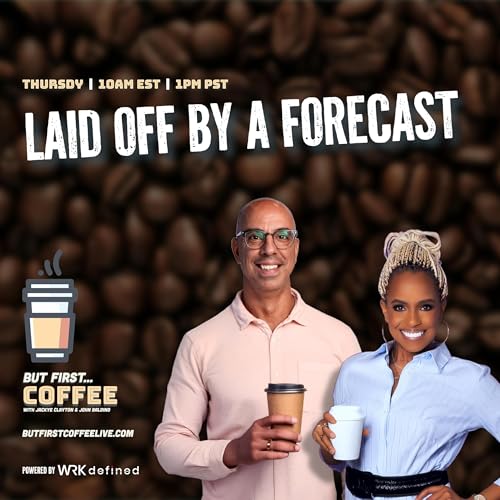
  • Laid Off by a Forecast
    2026/04/03
    Oracle just cut 30,000 jobs before most people finished their first cup, all to fund AI data centers. A new CEO survey reveals AI-driven cuts will be 9x higher than previously projected. This episode digs into what happens when workforce decisions are made by financial models instead of people managers, and what HR leaders need to do about it right now. Key Takeaways: Oracle's 30,000-person layoff signals a shift from traditional restructuring to AI-investment-driven workforce reductions CEO surveys now project AI-driven job cuts at 9x the rate previously forecasted Financial forecasting models are increasingly replacing human judgment in headcount decisions HR leaders must understand how AI investment priorities directly impact workforce planning The gap between C-suite AI optimism and frontline employee anxiety is widening Companies are rebranding layoffs as "strategic realignment" to mask AI displacement Severance, reskilling, and outplacement programs have not kept pace with the speed of AI-driven cuts Transparency in communicating workforce changes remains a critical leadership gap Employees laid off by forecast models face different reemployment challenges than those in traditional layoffs HR's role is shifting from managing change to anticipating algorithmic workforce decisions Keywords: AI layoffs, workforce reduction, Oracle layoffs 2026, AI-driven job cuts, CEO AI survey, workforce planning, HR leadership, algorithmic workforce decisions, AI data centers, employee displacement
    続きを読む 一部表示
    54 分
まだレビューはありません