『In The Garden』のカバーアート

In The Garden

In The Garden

著者: Gordon Clinton Williams M.Ed.
無料で聴く

概要

In The Garden is a daily journey through the Scriptures, an invitation to slow down, breathe deep, and walk with God in the garden of His Word.

Hosted by Gordon C. Williams, M.Ed. (usually called Clint), In The Garden blends biblical storytelling, poetic interpretation, ancient context, scientific curiosity, and Christ-centered teaching into a warm, reflective, and deeply accessible radio-style program. Each episode guides listeners through the Bible, from Genesis to Revelation, with the humility to honor both the literal and the literary beauty of the text.

Genesis, for example, is approached as many Christians across the centuries have read it: true, inspired, God-breathed Scripture, written in the rich language of Hebrew poetry and theology—not as a modern science textbook. Clint explores how creation’s “days” can be understood poetically, symbolically, and even scientifically, without dismissing the possibility of a literal seven-day creation. He invites listeners to consider how a timeless Creator, who stands outside of time, could shape a universe that feels ancient to us yet unfolds at His command.

Every episode follows a simple rhythm:

  • Listen to the story
  • Consider its original context
  • Explore its symbols and themes
  • Reflect on what it reveals about humanity
  • Look for how the story leads to Jesus

Throughout the journey, Clint draws from Hebrew word studies, the narrative structure of Scripture, historical and cultural background, and the words of Jesus Himself—always returning to the conviction that the whole Bible tells the One Story that leads to Christ.

Whether unpacking the symbolism of Adam and Eve, the spiritual psychology of Jacob and Esau, the rise of agriculture beneath the story of Cain and Abel, or the meaning of covenant in the life of Abraham, In The Garden offers thoughtful, accessible teaching for listeners from every background: lifelong Christians, curious seekers, new believers, recovering skeptics, and anyone longing to rediscover the beauty of Scripture.

In The Garden was born in West Texas and is broadcast locally on KCKM 1330 AM, where neighbors, families, truckers, farmers, teachers, and everyday people tune in weekly to hear the Word of God taught with tenderness, craftsmanship, and hope. The podcast version, released shortly after each broadcast, offers an extended edition for listeners who want to dig a little deeper.

Wherever you listen from, you are invited to step into the garden. Here, among the stories of Scripture, we learn how to cultivate the soil of the heart, plant seeds of wisdom, uproot the weeds that choke our joy, and walk with our Lord in the cool of the day.

This is In The Garden. Welcome. Your time here is holy ground.

Green Mission
キリスト教 スピリチュアリティ 聖職・福音主義
エピソード
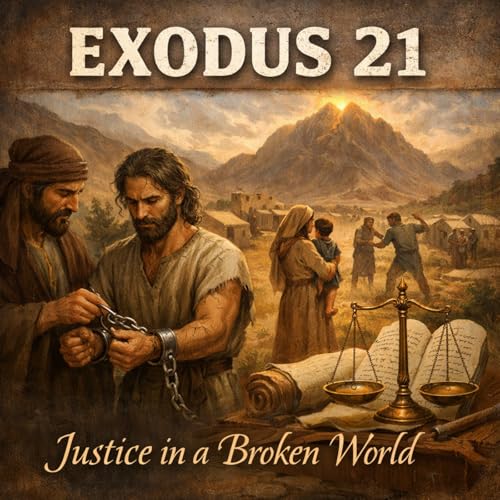
  • Exodus 21: Justice in a Broken World
    2026/03/29

    Slavery, justice, and God’s law—how do they fit together?

    In Exodus 21, we see God bringing order, restraint, and dignity into a broken world.

    This episode explores one of the most difficult passages in Scripture and reveals something surprising: God is not endorsing injustice—He is limiting it. In a culture where slavery, violence, and unchecked power were already the norm, God establishes boundaries that protect the vulnerable, restrain revenge, and affirm the value of human life.

    We walk through the laws of Exodus 21 and uncover how they functioned within their historical context. From the release of Hebrew servants after six years to the principle of “eye for eye,” these laws were not about creating a perfect society overnight—but about introducing justice where there was none.

    You’ll also hear how this passage connects to the broader story of the Bible. The same God who gives these laws is the One who delivers His people from slavery and ultimately points forward to something greater—freedom, restoration, and redemption through Christ.

    Jesus Himself sheds light on these kinds of laws in Gospel of Matthew 19, reminding us that some commands were given because of the hardness of human hearts. And yet, the trajectory of Scripture always moves toward freedom, dignity, and unity in Him.

    This episode will help you:

    Understand the cultural and historical context of Exodus 21

    See how God establishes justice within broken systems

    Recognize the difference between Biblical servitude and modern concepts of slavery

    Trace the thread of redemption from Exodus to Jesus

    If you’ve ever wrestled with difficult Old Testament laws, this conversation will challenge and encourage you to see the heart of God more clearly.

    👉 Share this episode with someone who struggles with passages like this, and join the conversation.

    👉 Follow for more daily Bible-based insights and practical teaching.

    👉 Keep reading—because even in the laws, God is revealing His character.

    Scripture References:

    Exodus 21:1–36

    Exodus 20:2

    Matthew 19:8

    John 8:36

    Galatians 3:28

    続きを読む 一部表示
    5 分
  • Exodus 20: The Law Written
    2026/03/29

    Ten commandments on the wall… but are they written on your heart?

    Exodus 20 reveals more than rules—it reveals the life God calls us to live.

    In this episode, we explore the foundation of God’s Law in Exodus 20 and the well-known Ten Commandments—words now appearing on posters in classrooms across Texas. But what do they really mean? And how do they fit into the larger story of Scripture?

    While many recognize the “top ten,” the Law of Moses actually includes 613 commandments (mitzvot), shaping every aspect of life for God’s people. The Ten Commandments serve as the foundation, revealing what it looks like to love God and love others in everyday life.

    But here’s the deeper truth:

    God gave the Law after He rescued His people—not before.

    “I am the Lord your God, who brought you out of Egypt…” (Exodus 20:2)

    The Law is not a ladder to earn salvation—it’s a path for those already redeemed.

    In this episode, we unpack:

    Why the Ten Commandments come first in the Law

    How the 613 commandments point to a complete life of obedience

    The danger of reducing God’s Word to something external—like a poster on a wall

    How Jesus Christ deepens the Law, moving it from outward behavior to inward transformation

    God’s ultimate desire: not just obedience, but hearts changed from within

    Jesus teaches that all the Law can be summed up in two commands: Love God. Love your neighbor. (Matthew 22:37–40)

    And the prophets point forward to something even greater: A day when God’s Law would not just be written on stone—but written on the heart.

    This episode invites you to reflect:

    Are these commands just something you see…

    or something you live?

    Because:

    If these words hang on a wall, they are easy to ignore.

    But if they are written on the heart, they become life.

    Keywords: Exodus 20, Ten Commandments, Law of Moses, 613 mitzvot, Bible teaching, Christian podcast, Jesus and the Law, heart transformation, Old Testament, faith and obedience

    Call to Action:

    If this episode challenged or encouraged you, share it with a friend, a student, or a teacher. Take a moment today to read Exodus 20 for yourself—and ask God not just to show you His Word, but to write it on your heart.

    Scripture References:

    Exodus 20:2–17

    Matthew 5:21–28

    Matthew 22:37–40

    Galatians 3:24

    Jeremiah 31:33

    続きを読む 一部表示
    6 分
  • Exodus 19: When Access Is Dangerous
    2026/03/28

    You were never meant to approach God casually… but you were always meant to come close.

    Exodus 19 reveals a holy boundary—and points to the only way it could ever be crossed.

    In this episode, we step into the trembling scene at Mount Sinai, where fire, smoke, and thunder surround the presence of God. The command is clear: do not come near. And yet, in the middle of that warning, God calls the priests to consecrate themselves.

    Why prepare to draw near… if you’re still not allowed to come all the way?

    Because Exodus 19 is not confusion—it’s a revelation.

    It shows us a God whose holiness is not casual, not safe, and not to be approached on human terms. There are layers of access: the people remain at a distance, the priests come nearer with preparation, and Moses alone ascends into the presence of God. This moment establishes a pattern we see throughout Scripture—distance, danger, and the need for a mediator.

    But this is not where the story ends.

    Sinai teaches us something we often forget: before we can understand grace, we must first understand holiness. Before we can appreciate access, we must feel the weight of separation. The boundaries at the mountain are not meant to push us away forever—they are meant to awaken us to our need.

    And that need is ultimately met in Jesus.

    What was once restricted becomes open. What was once dangerous becomes invitation—not because God has changed, but because a way has been made. The tearing of the temple veil marks a turning point in history: access to God is no longer limited to one man, one place, one moment.

    Through Christ, we are invited to draw near with confidence—but never casually.

    This episode challenges us to hold both truths together: God is holy beyond comprehension…

    and through Jesus, we are welcomed into His presence.

    So how do you approach God today?

    Do you keep your distance… or have you forgotten the weight of His holiness?

    Do you come casually… or confidently through the One who made a way?

    Take time today to reflect on the God of Sinai—and the Savior who brings you near.

    Call to Action:

    Read Exodus 19 slowly. Picture the scene. Feel the distance. Then read it again in light of Jesus—and respond. Draw near to God in reverence and confidence, trusting not in yourself, but in the One who stands between.

    Scriptures Referenced:

    Exodus 19:16–25

    Exodus 20:18–21

    Hebrews 12:18–24

    Matthew 27:50–51

    Hebrews 10:19–22

    続きを読む 一部表示
    5 分
まだレビューはありません